Don’t miss out!
Get the latest resources sent directly to your inbox.

Nobody saw this coming quite so fast.
A customer sits down at their kitchen table, opens ChatGPT, and types: “Where’s the best place to buy an RV in [city]?” They don’t Google. They don’t scroll through ads. They just… ask. And they trust what comes back.
We ran that exact experiment across four AI tools: ChatGPT, Claude, Gemini, and Perplexity. Same question, several markets. The results stopped us cold. Dealers we’d expect to top any list weren’t on it. Others we’d never have predicted were showing up everywhere.
The difference wasn’t website design. It wasn’t ad spend. It wasn’t even SEO.
It was reputation.
AI search tools don’t return a ranked list of websites. They form an opinion. They synthesize thousands of data points — reviews, forum posts, directory listings, local press mentions, social conversations — and they make a recommendation. Like a well-informed friend who’s done all the research for you.
That changes everything about how you get found.
Your website still matters. But it’s one input into a much larger picture. The question AI is really answering isn’t “who has the best website?” It’s “who do people trust?”
And trust is built in your service lane. At your delivery. In your follow-up call three weeks after the sale.
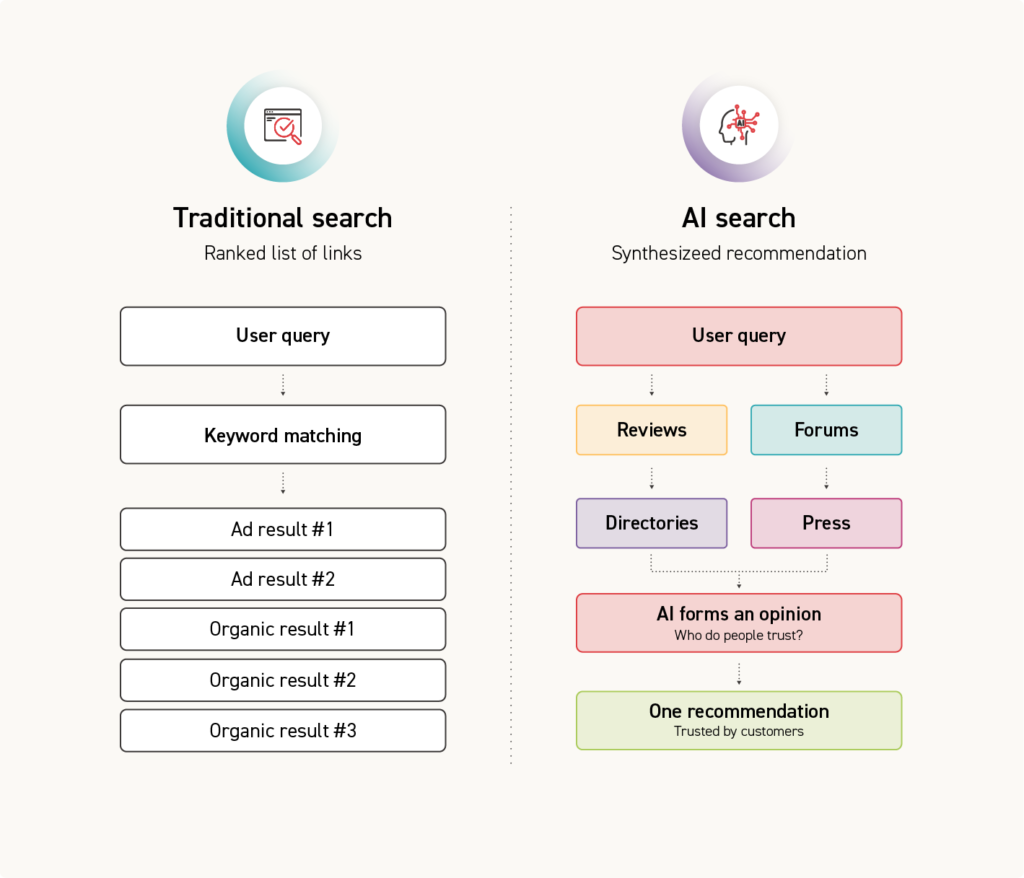
Here’s where it gets interesting and where most dealers aren’t connecting the dots yet.
Your DMS isn’t just a back-office tool. It’s the engine behind every customer interaction that either builds or erodes your reputation. And your reputation is now your search ranking.
Think about it this way:
A customer comes in for a warranty repair. Your service team is juggling ROs, parts are on backorder, and nobody loops back to the customer with an update. They wait. They get frustrated. They leave a 2-star review that mentions being ignored. That review gets read by AI. And suddenly you’re not on the list.
Now flip it. Your DMS flags the open RO, prompts a service advisor to call with an update, automatically sends a follow-up when the unit is ready, and triggers a review request 48 hours after pickup. The customer feels taken care of. They leave a five-star rating and mention the advisor by name. That review gets read by AI, too. And you move up the list.
Same dealership. Different outcome. Different system.
IDS customers are seeing this play out in real time. Dealers are using IDS to:
This is what levels the playing field. Not a bigger marketing budget. Not a website redesign. A system that makes it structurally hard to drop the ball on a customer.
When you stop dropping balls, customers talk. When customers talk, AI listens.
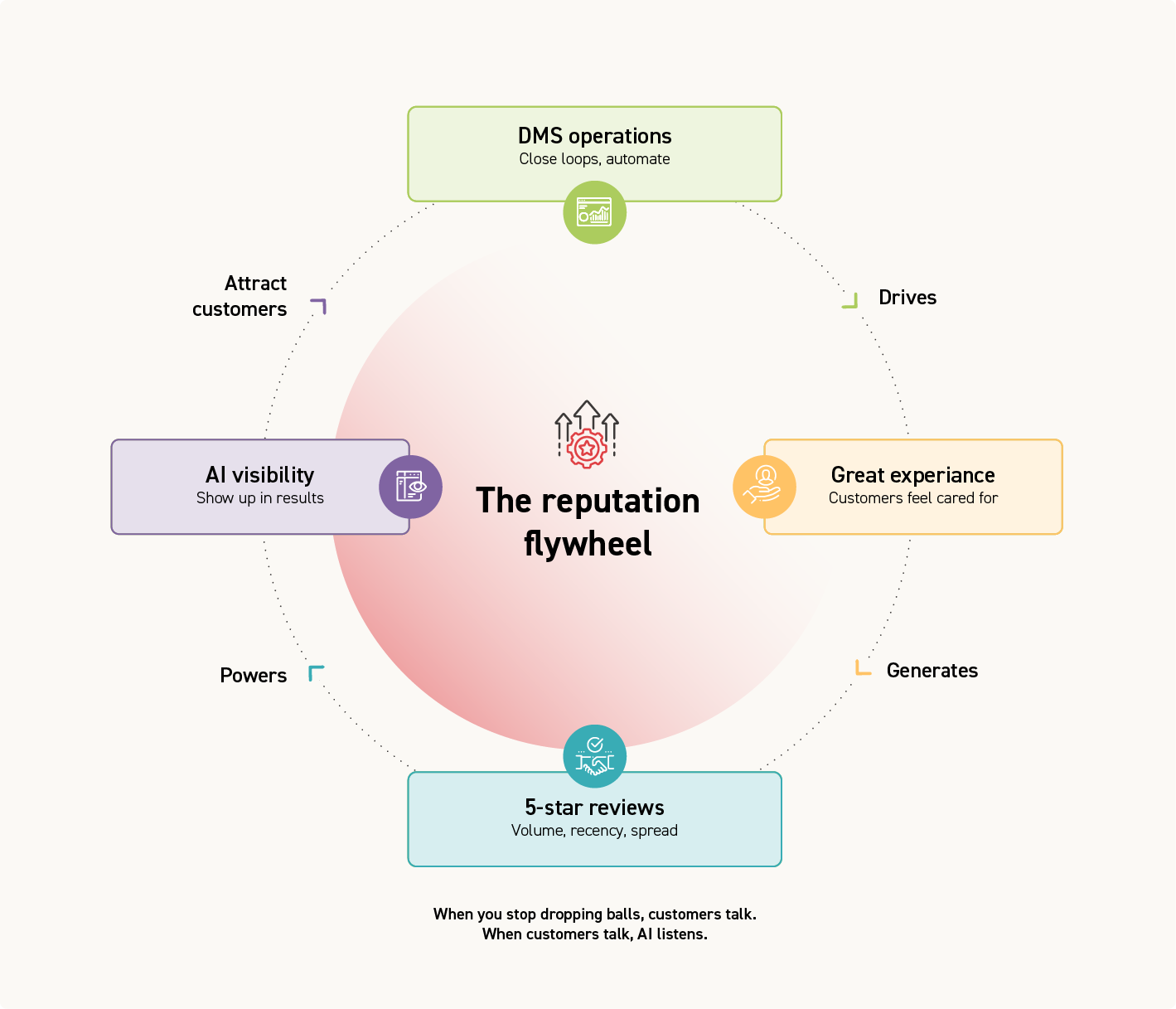
Operational excellence drives reputation. Reputation drives AI visibility. But there are also concrete steps your marketing person can take right now to improve how AI reads your dealership:
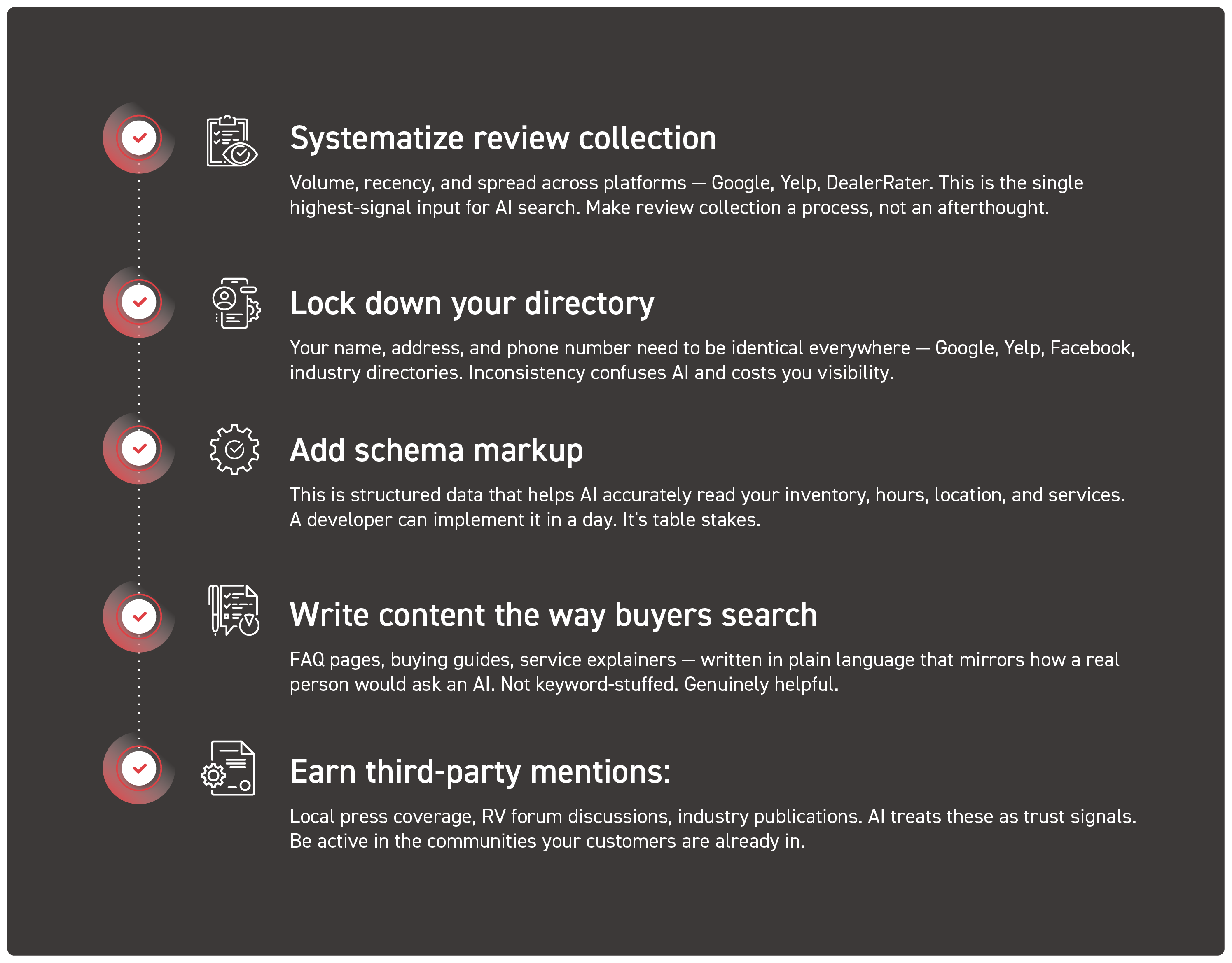
AI search is here. Your customers are using it right now to decide where to buy their next RV — and where to send their friends.
The dealers who show up aren’t gaming an algorithm. They’re running their operations in a way that makes customers want to talk about them. And they have systems in place that make delivering that experience repeatable, not accidental.
Your DMS is either helping you build that reputation or making it harder.
Which one is it?
Curious how IDS customers are using their DMS to drive reviews and referrals?
Get the latest resources sent directly to your inbox.